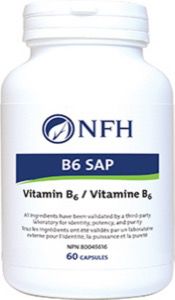
|
|||||
|
|
|||||
• B6 SAP replenishes vitamin B6 stores in individuals taking pharmaceutical agents that deplete this nutrient in the body, including oral contraceptive pills, corticosteroids, theophylline, and isoniazid, and patients undergoing some forms of hemodialysis therapy.
• B6 SAP is effective for relief of symptoms associated with premenstrual syndrome and nausea and vomiting of pregnancy.
• B6 SAP may lower blood homocysteine levels and subsequently reduce the risk of cardiovascular disease, strokes, and cancer.
• B6 SAP may be effective for carpal tunnel syndrome, and in the prevention and treatment of colorectal disease.
Each vegetable capsule contains:
Vitamin B6 (Pyridoxine HCl) ... 150 mg
Vitamin B6 (Pyridoxal 5-phosphate) ... 10 mg
Vitamin B3 (Niacinamide)... 80 mg
Vitamin B1 (Thiamine HCl) ... 50 mg
Vitamin B5 (Calcium pantothenate) ... 50 mg
Choline bitartrate... 40 mg
Vitamin B2 (Riboflavin)... 15 mg
Vitamin B2 (Riboflavin 5-phosphate) ... 5 mg
Vitamin B12 (Methylcobalamin) ... 200 mcg
Folic acid (Folate)... 400 mcg
Biotin... 80 mcg
Contains no: preservative, artificial flavor or color, sugar, corn, milk, wheat or yeast.
Vitamin B6 is involved in more bodily functions than almost any other single nutrient, with roles in homocysteine metabolism, hemoglobin formation, neurotransmitter synthesis, and acts as a potent antioxidant in the body. B6 SAP provides a healthy supplemental dose of vitamin B6, including 10 mg of the active form pyridoxal 5-phosphate, in a blend of B vitamins and choline to support optimal B6 metabolism. FEATURES B6 SAP provides enzyme forms of vitamins B2 (riboflavin 5-phosphate) and B6 (pyridoxal 5-phosphate) for direct assimilation into the bloodstream without having to be processed by the liver.
INCREASED BIOAVAILABILITY All of the vitamins used in this B6 formula are USP compliant. B6 SAP is supplied in a vegetarian capsule for easy digestion and assimilation as opposed to conventionally compressed tablets.
PURITY, CLEANLINESS and STABILITY Third party testing on finished product to ensure B6 SAP is free of heavy metals, volatile organics and other impurities. Vitamin B6 is a highly water-soluble vitamin that is required for the proper functioning of over 140 enzymes involved in amino acid, fatty acid, and homocysteine metabolism, as well as in glycogen degradation, DNA/RNA synthesis, gene expression, and hemoglobin formation(1, 2). It is required in the synthesis of several neurotransmitters including the conversions of DOPA to dopamine, tryptophan to serotonin, and glutamic acid to gamma-aminobutyric acid (GABA)(2, 3). Additionally, B6 exhibits potent antioxidant activity greater than that of vitamins C and E(1). B6 VITAMERS B6 exists as three related pyrimidine vitamer derivates that can be inter-converted in the body: pyridoxine (PN), pyridoxamine, and pyridoxal, and their phosphate esters(1). Pyridoxal 5-phosphate (P5P), the phosphate ester of pyridoxal, is the metabolically active form of B6 and is considered the most relevant direct measure of B6 status(4). Dietary B6 vitamers are first acted on by intestinal phosphatases and absorbed as PN, pyridoxamine, and pyridoxal, which are then taken up by the liver and phosphorylated by the enzyme pyridoxal kinase to their phosphate esters(5). Figure 1 illustrates various pathways by which B6 vitamers are converted into P5P(5). Supplemental B6 is typically available as PN hydrochloride and P5P(4). The benefit of administering P5P is that it does not require processing by the liver for activation, which becomes an important issue in patients with liver disease(4) or a deficiency of the enzymes involved in the conversion pathway(5).
B6 DEFICIENCY Deficiency symptoms of this vitamin are wide-ranging and diverse due to its role in multiple metabolic functions throughout the body, and the fact that B6 deficiency rarely occurs in isolation from other B-complex vitamins(2). Causes of deficiency include absorption disorders, genetic factors, interactions with drugs, or elevated requirements as seen with advancing age, HIV infection, alcohol abuse, celiac disease(2, 3), and some forms of hemodialysis therapy(2, 3, 6). Sub-optimal levels or mild deficiency may be present for months or years without the appearance of clinical signs and symptoms, which most commonly include hypochromic, microcytic, iron-refractory anemia, and immunosuppression characterized by decreased interleukin (IL)-2 production and depressed lymphocyte production and activity(2). Deficiency may also produce peripheral neuropathy, which is, ironically, one of the main symptoms associated with B6 toxicity(21). In addition, four inborn errors of B6 metabolism have been identified that cause early-onset, drug-refractory, convulsive seizures(5), possibly due to decreased GABA synthesis(3). Three of these conditions respond to supplementation of B6 in any form, but patients suffering from a deficiency in the enzyme pyridox(am)ine phosphate oxidase require P5P specifically(5).
B6 DEPLETION BY PHARMACOLOGICAL AGENTS Several drugs have been shown to deplete B6 levels in the body, including oral contraceptive pills, theophylline and its derivatives (for respiratory disorders), isoniazid (for tuberculosis), penicillamine, hydralazine (a vasodilator), L-DOPA, corticosteroid medications, and some diuretics(2, 7). Oral Contraceptive Pills (OCPs) Oral birth control has been in use in North America since the 1960's. Numerous studies from the 1970's and 80's have documented impairments in B6 status in women taking oral estro-progestational hormones(7), and ethinylestradiol has been shown to interfere with B6 metabolism by causing increased P5P retention in the tissues(2). Consequent disturbances in tryptophan metabolism as a result of B6 deficiency leads to symptoms of depression, anxiety, decreased libido, and altered glucose balance in some women(7). Supplementation with 40 mg/d B6 has been shown to restore normal blood levels and reverse clinical symptoms in deficient OCP users(7). Research on more current OCP preparations is required. To examine whether perturbances in B6 metabolism occur shortly after initiation of OCP use, 23 young women who had never taken OCP before were given a low dose (30 mcg) ethinyl estradiol-containing Triphasil preparation and followed for 6 menstrual cycles(8). While plasma and erythrocyte B6 levels were not affected in the majority of patients with adequate dietary intake, P5P metabolism was found to be altered(8). Theophylline, Aminophylline Theophylline and its derivatives depress plasma P5P levels; intoxification with these drugs, which may occur from acute or chronic overdose, has been known to cause drug-refractory seizures that improve with PN supplementation(3). Hydrazines: Hydralazine and Isoniazid Hydralazine, a vasodilator, and isoniazid, a tuberculosis drug, are both derivatives of hydrazine, a compound that reacts with P5P and blocks its action(2, 9). Side effects of isoniazid-induced B6 deficiency, most commonly peripheral neuropathy, can be prevented by supplementing PN at a daily dose of 50-100 mg/d(9, 10). Penicillamine Incidence of PN deficiency has dropped since the more recent use of D-penicillamine; however it is still common practice to supplement 25 mg PN/d when using penicillamine in the treatment of Wilson's disease(5).
THE ROLE OF B6 IN ONE-CARBON (METHYL) METABOLISM One-carbon metabolism, also known as the remethylation pathway, is a chain of biochemical reactions involving the transfer of one-carbon groups from one compound to another that is crucial for the synthesis of nucleic acids and methionine, and for the breakdown of homocysteine(11). Several B vitamins, including folate, B6, and B12 are necessary coenzymes in this pathway, and methionine and choline appear as intermediary compounds(11). Even modest dietary inadequacies of these nutrients have been implicated to contribute to diseases such as neural tube defects, cardiovascular disease, and cancer that may occur in the absence of clinical deficiency(11). Homocysteine Disruptions in one-carbon metabolism may also lead to elevated levels of homocysteine (Hcy), a sulphur amino acid that has been linked with increased risk of cardiovascular disease, cognitive impairment, and cancer(2, 11). A recent systematic review and meta-analysis quantified the relationship between Hcy and coronary heart disease (CHD), stating that for each increase of 5 μ mol/L Hcy, the risk of CHD events rises by approximately 20% independently of traditional CHD risk factors(12). Hcy levels have also been directly associated with acute cerebrovascular disease through observational studies(13). The Heart Outcomes Prevention Evaluation 2 (HOPE-2) study was a randomized, masked, placebocontrolled trial with 5522 subjects with a history of various Hcy-related conditions including coronary, cerebrovascular, and peripheral arterial diseases(13). Supplementation with folic acid (2.5 mg/d), B6 (50 mg/d), and B12 (1 mg/d) over a period of 5 years resulted in a 25% reduction in total stroke incidence, although stroke severity and subsequent disability were not altered(13).
B6 SUPPLEMENTATION IN HEALTH AND DISEASE Premenstrual syndrome Premenstrual syndrome (PMS) encompasses a range of physical, psychological, and emotional symptoms that occur during the luteal phase of the menstrual cycle, and are relieved at the onset of, or during, menstruation(14). Approximately 95% of women of reproductive age experience some form of this condition, with 5% of these individuals suffering from severe, debilitating symptoms that interfere with daily life(14). Early research on the use of B6 for the treatment of PMS was conflicted, mainly confounded by poor study design and low subject number(14, 15); however, the majority of trials show benefit, and B6 supplementation is an accepted treatment for PMS in Europe(15). A 2007 placebo-controlled study of 60 PMS patients aged 20–45 years compared supplementation with 100 mg PN 2X/day vs. 2.5 mg bromocriptine 2X/d(16). After three months of treatment, significant improvement was seen in both intervention groups, with B6 subjects exhibiting greater benefit and lesser incidence of side effects than those taking bromocriptine(16). Nausea and Vomiting of Pregnancy Nausea in early pregnancy is so common that it is often the first sign that alerts a woman that she is pregnant(17). Approximately 70–85% of women experience nausea, half of whom also suffer from vomiting episodes, which causes severe discomfort and may result in malnutrition(18). Despite extensive research, the etiology of this condition remains unknown(17, 18). PN has been an empirical treatment for pregnancy-related nausea and vomiting for more than 40 years, which has led to its inclusion as one of only two ingredients in the pharmaceutical formula Diclectin (aka. Bendectin, Debendox)(17). Clinical trials examining the use of B6 supplementation on its own have yielded positive results, most of which show beneficial effects to occur within a very short time period(17, 18). In a placebo-controlled randomized double-blind study, 336 women at ≤ 17 weeks gestation suffering from nausea with or without vomiting were supplemented with PN hydrochloride at a dose of 30 mg/d for five days(17). Although significant improvement was seen in nausea over the treatment period, significant reduction in vomiting episodes occurred only within the first three days, with effect diminishing towards the end of the supplementation period(17). The authors speculate that this may be related to the tendency for the condition to fluctuate over time and advise intermittent treatment for 2–3 days at a time(17). Colorectal Disease One-carbon metabolism is directly involved in nucleotide synthesis and DNA methylation, two processes that, if altered, may initiate carcinogenesis(20). The roles of folate, B6 and B12 in one-carbon metabolism, along with previous research demonstrating that B6 suppresses nitric oxide, and has anti-proliferative, antioxidant, and anti-angiogenic properties has led to exploration of the potential of these B-vitamins in cancer prevention and treatment(20). The Nurses' Health Study, a prospective nested case-control study that began in 1976 with over 100,000 nurses, was conducted to establish the link between nutrition and colorectal disease(20). Higher intakes of folate and vitamins B6 and B12 were associated with lower Hcy levels and reduced incidence of colorectal cancer and colorectal adenoma(20). Plasma P5P status exhibited a significant negative correlation with risk of distal colorectal adenoma independently of folate status. This effect pertained in particular to the advanced stage of the disease, suggesting that B6 may attenuate the progression of adenoma to early cancer, possibly via its role in one-carbon metabolism(20). Carpal Tunnel Syndrome Carpal tunnel syndrome (CTS) is a common condition believed to be caused by compression of the median nerve as it passes through the carpal tunnel(21). Vitamin B6 is a critical cofactor in the synthesis of neuronal proteins, and is involved in numerous other pathways that affect peripheral nerve function, including neurotransmitter synthesis, amino acid metabolism, and sphingolipid biosynthesis and degradation(21). It also has the ability to act as an analgesic, possibly by up-regulating GABA and serotonin synthesis(21). Though higher quality studies are required, the literature shows symptomatic relief for some people at doses of up to 200 mg/d, and recommendation is reasonable, especially given the low potential for toxicity with this intervention(21). Whether the mechanism lies in correction of B6 deficiency-induced peripheral neuropathy, or by raising an individual's pain threshold is unclear(21). A recent article instructing health practitioners on the use of this treatment in clinical practice recommends a gradual tapering of the dose after 3 months for patients who experience an improvement in their symptoms(22).
B6 TOXICITY AND DOSING GUIDELINES No negative reactions resulting from high B6 intake from food sources have been reported(2), but both acute toxicity and the delayed adverse effects of PN taken in supplemental form have been documented(3). Very high single doses of 2–6 grams induce peripheral neuropathy, ataxia, incoordination, seizures, and are lethal in animal models(3). Additionally, excessive chronic administration (200–6000 mg/d) over months or years may result in the development of a peripheral sensory neuropathy associated with bilateral paraesthesia, hyperaesthesia, limb pains, ataxia, and incoordination(3, 7), as well as seborrheic dermatitis, stomatitis, glossitis, cheilosis, depression, and irritability(7). No motor deficit or CNS involvement is usually observed, and symptoms typically resolve within six months of PN withdrawal(3). It should be noted that the Institute of Medicine has set the upper tolerable limit at 100 mg/d(7), and studies using doses of up to 200 mg/d report efficacy with minimal to no cases of adverse effects(14, 15). Furthermore, the lack of a dose-response relationship has been documented at high levels of supplementation(14, 15).
60 capsules/bottle
1 capsule daily with a glass of water or juice, or as directed by your health care practitioner.
1. Mooney S, Leuendorf J, Hendrickson C, Hellmann H. 2009. Vitamin B6: a long known compound of surprising complexity. Molecules, 14(1):329-51.
2. Spinneker A, Sola R, Lemmen V, Castillo M, Pietrzik K, GonzÁlez-Gross M. 2007. Vitamin B6 status, deficiency and its consequences-an
overview. Nutr Hosp, 22(1):7-24.
3. Lheureux P, Penaloza A, Gris M. 2005. Pyridoxine in clinical toxicology: a review. Eur J Emerg Med, 12(2):78-85.
4. Vitamin B6 (pyridoxine and pyridoxal 5'-phosphate) - monograph. 2001. Altern Med Rev, 6(1):87-92.
5. Wang H, Kuo M. 2007. Vitamin B6 related epilepsy during childhood. Chang Gung Med J, 30(5):396-401.
6. Kasama R, Koch T, Canals-Navas C, Pitone J. 1996. Vitamin B6 and hemodialysis: the impact of high-flux/high-efficiency dialysis and
review of the literature. Am J Kidney Dis, 27(5):680-6.
7. Bermond P. 1982. Therapy of side effects of oral contraceptive agents with vitamin B6. Acta Vitaminol Enzymol, 4(1-2):45-54.
8. MassÉ P, van den Berg H, Duguay C, Beaulieu G, Simard J. 1996. Early effect of a low dose (30 micrograms) ethinyl estradiol-containing
Triphasil on vitamin B6 status. A follow-up study on six menstrual cycles. Int J Vitam Nutr Res, 66(1):46-54.
9. Clayton, P. 2006. B6-responsive disorders: A model of vitamin dependency. J Inherit Metab Dis, 29:317–326
10. Ebadi M, Gessert C, Al-Sayegh A. 1982. Drug-pyridoxal phosphate interactions. Q Rev Drug Metab Drug Interact, 4(4):289-331.
11. Mason J. 2003. Biomarkers of nutrient exposure and status in one-carbon (methyl) metabolism. J Nutr, 133 Suppl 3:941S-947S.
12. Humphrey L, Fu R, Rogers K, Freeman M, Helfand M. 2008. Homocysteine level and coronary heart disease incidence: a systematic review
and meta-analysis. Mayo Clin Proc, 83(11):1203-12.
13. Saposnik G, Ray J, Sheridan P, McQueen M, Lonn E; the HOPE 2 Investigators. 2009. Homocysteine-lowering therapy and stroke risk,
severity, and disability. Additional findings from the HOPE 2 trial. Stroke, Feb 19.
14. Wyatt K, Dimmock P, Jones P, Shaughn O'Brien P. 1999. Efficacy of vitamin B6 in the treatment of premenstrual syndrome: systematic
review. BMJ, 318;1375-1381
15. Fugh-Berman A, Kronenberg F. 2003. Complementary and alternative medicine (CAM) in reproductive-age women: a review of randomized
controlled trials. Reprod Toxicol, 17(2):137-52.
16. Sharma P, Kulshreshtha S, Singh G, Bhagoliwal A. 2007. Role of bromocriptine and pyridoxine in premenstrual tension syndrome. Indian
J Physiol Pharmacol, 51(4):368-74.
17. Vutyavanich T, Wongtra-ngan S, Ruangsri R. 1995. Pyridoxine for nausea and vomiting of pregnancy: a randomized, double-blind,
placebo-controlled trial. Am J Obstet Gynecol, 173(3 Pt 1):881-4.
18. Ensiyeh J, Sakineh M. 2008. Comparing ginger and vitamin B6 for the treatment of nausea and vomiting in pregnancy: a randomised
controlled trial. Midwifery, Feb 11.
19. Sripramote M, Lekhyananda N. 2003. Comparison of the effectiveness of ginger and vitamin B6 for treatment of nausea and vomiting in
early pregnancy: a randomized double-blind controlled trial. J Med Assoc Thai, 86(9):846-53.
20. Ebadi M, Gessert C, Al-Sayegh A. 1982. Drug-pyridoxal phosphate interactions. Q Rev Drug Metab Drug Interact, 4(4):289-331.
21. Aufiero E, Stitik TP, Foye P, Chen B. 2004. Pyridoxine hydrochloride treatment of carpal tunnel syndrome: a review. Nutr Rev, 62(3):96-104.
22. Ryan-Harshman M, Aldoori W. 2007. Carpal tunnel syndrome and vitamin B6. Can Fam Physician, 53(7):1161-2.
Disclaimer: This content is subject to change. The information is intended to inform and educate; it does not replace the medical evaluation, advice, diagnosis or treatment by a healthcare professional. www.nhpassist.com © 2014 NDAssist Inc. and/or its affiliates. All rights reserved.



|
B6 SAPIndications
Warning (2)
: Trying to access array offset on value of type null [in /home/ndassist/nhpassist.com/templates/Products/index.php, line 2776]
• B6 SAP replenishes vitamin B6 stores in individuals taking pharmaceutical agents that deplete this nutrient in the body, including oral contraceptive pills, corticosteroids, theophylline, and isoniazid, and patients undergoing some forms of hemodialysis therapy. IngredientsEach vegetable capsule contains: Quantity
Warning (2)
: Trying to access array offset on value of type null [in /home/ndassist/nhpassist.com/templates/Products/index.php, line 2807]
Dose1 capsule daily with a glass of water or juice, or as directed by your health care practitioner. |
|---|